

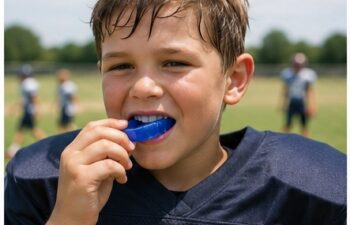
Between school athletics, recreational activities, nighttime teeth grinding, and orthodontic treatment, children’s teeth can face more pressure than many parents realize.
Fortunately, a properly designed dental appliance can help protect a growing smile. The key is choosing the right appliance for the right purpose.
Sports mouthguards and night guards may look somewhat similar, but they are not interchangeable. One protects against sudden impact. The other helps shield teeth from repeated clenching and grinding.
For families searching for custom mouthguards in Covington, GA, understanding the difference is the first step toward better protection.
Why Young Athletes Need Sports Mouthguards
Sports-related dental injuries can happen during contact sports such as football, basketball, soccer, hockey, lacrosse, wrestling, and martial arts. They can also occur during gymnastics, skateboarding, bicycling, baseball, volleyball, and other activities where a child could fall or receive an impact to the face.
The American Dental Association recommends properly fitted mouthguards for activities with a meaningful risk of dental or facial injury. Research reviewed by the ADA has consistently found a lower risk of dental trauma among athletes who wear mouthguards.
A sports mouthguard may help protect against:
- Chipped or fractured teeth
- Knocked-out teeth
- Cuts to the lips, cheeks, and tongue
- Damage to dental restorations
- Certain jaw and soft-tissue injuries
The American Academy of Pediatric Dentistry also encourages dentists to educate families about injury prevention and provide properly fitted mouthguards for children at increased risk of sports-related dental trauma.
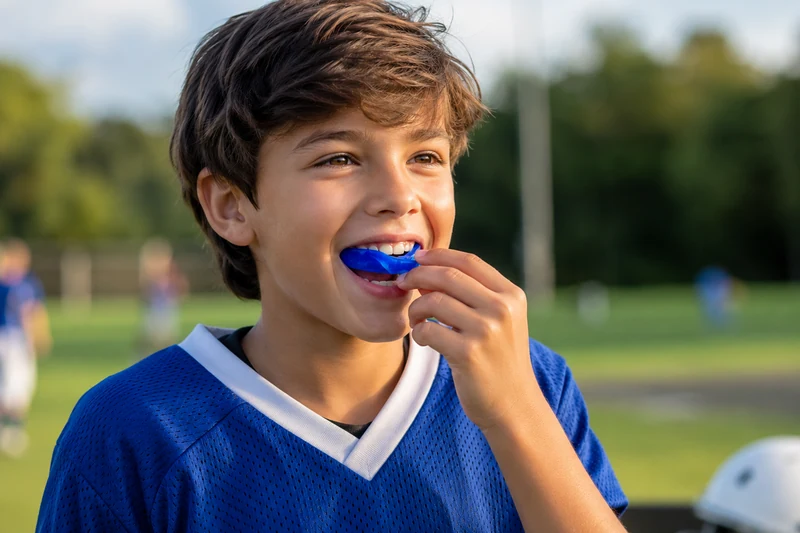
Store-Bought Versus Custom Sports Mouthguards
Parents generally encounter three types of athletic mouthguards:
Stock Mouthguards
These are preformed and ready to wear. Because they offer little customization, they may feel bulky, shift during activity, or make speaking and breathing more difficult.
Boil-and-Bite Mouthguards
These are softened in hot water and shaped around the teeth. They offer more adaptation than stock guards, although their fit and thickness can become uneven.
Dentist-Made Custom Mouthguards
A custom sports mouthguard is made from an impression or digital scan of the athlete’s teeth. It is designed to remain securely in position while providing appropriate coverage and impact absorption.
A comfortable, stable fit is especially important because the most protective mouthguard is one an athlete will consistently wear during practices and games.
Mouthguards for Children With Braces
Children and teenagers undergoing orthodontic treatment may still need mouthguards. However, the appliance must accommodate brackets, wires, tooth movement, and changes in the developing mouth.
A dentist can help determine whether the mouthguard needs additional space or more frequent replacement during orthodontic treatment.
What Is a Night Guard?
A night guard, sometimes called an occlusal guard or bite splint, is designed for patients who clench or grind their teeth.
Sleep bruxism involves repeated jaw-muscle activity during sleep. Possible warning signs include visible tooth wear, chipped enamel, morning jaw fatigue, facial discomfort, headaches, or grinding sounds noticed by a parent or sibling. Bruxism can have several contributing factors, and a dental evaluation may also identify signs that warrant assessment for an underlying sleep-related condition.
Unlike a sports mouthguard, a night guard is not designed to absorb a ball, elbow, fall, or other athletic impact. Its purpose is generally to separate and protect the teeth while distributing the forces created by clenching or grinding.
Does Every Child Who Grinds Need a Night Guard?
No. Children’s mouths and bites are continuously developing, and treatment should be based on the individual child’s age, symptoms, tooth wear, dental development, and possible underlying causes.
Some children may only require monitoring. Others—particularly older children or teenagers experiencing significant wear, discomfort, or damage—may benefit from a carefully designed appliance.
A night guard should not be purchased solely because a parent hears occasional grinding. The dentist should first examine the teeth, jaw muscles, bite, airway-related symptoms, and stage of dental development.
Sports Mouthguard Versus Night Guard
| Feature | Sports Mouthguard | Night Guard |
|---|---|---|
| Primary purpose | Protects against athletic impact | Protects against clenching and grinding |
| When it is worn | Practices, games, and physical activities | During sleep |
| Typical material | Impact-absorbing and resilient | Durable material selected for the patient’s bite |
| Fit requirements | Secure during movement and breathing | Precisely balanced against the opposing teeth |
| Interchangeable? | No | No |
Wearing a night guard during sports does not provide the same impact protection as an athletic mouthguard. Likewise, sleeping in a bulky sports guard is not an appropriate substitute for a professionally evaluated night guard.
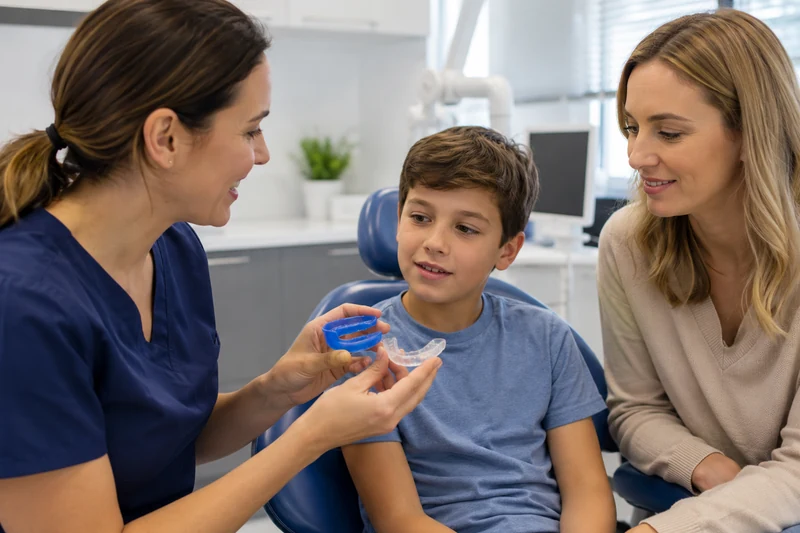
When Should a Child’s Mouthguard Be Replaced?
Growing children and teenagers may need replacement more frequently than adults. Schedule an evaluation when:
- The guard feels loose or uncomfortable
- Permanent teeth have erupted
- Orthodontic treatment has changed the bite
- The material is torn, chewed, warped, or thinning
- The child has experienced a significant facial impact
- The guard interferes with normal breathing or speaking
- The dentist notices new tooth wear or bite changes
Bringing the appliance to routine dental visits allows the dentist to inspect its condition and fit.
Frequently Asked Questions
At what age should a child begin wearing a sports mouthguard?
A child should wear one whenever participating in an activity that presents a realistic risk of impact to the teeth or face. The appropriate design depends on the child’s current teeth, growth, and orthodontic needs.
Can my child use the same mouthguard for several sports?
Possibly, provided it still fits securely, offers appropriate coverage, and remains in good condition. Higher-impact activities may require a different thickness or design.
Can a sports mouthguard prevent concussions?
Mouthguards are well established for reducing dental and oral injuries. Evidence regarding concussion prevention is less consistent, so they should be used alongside helmets and all other sport-specific safety equipment—not as a substitute for it.
Will a night guard make my child stop grinding?
A night guard primarily protects the teeth and restorations from grinding forces. It may not eliminate the muscle activity responsible for bruxism, which is why proper evaluation and ongoing monitoring remain important.
How should a mouthguard be cleaned?
Rinse it after each use, gently brush it according to the dentist’s instructions, allow it to dry, and store it in a ventilated case. Avoid exposing it to high heat, which can distort the material.
Protect Your Child’s Smile in Covington
A well-fitted dental appliance should feel comfortable, function properly, and address your child’s specific risk—not simply cover the teeth.
Creative Dentistry of Atlanta can evaluate your child or teenager for a custom sports mouthguard, nighttime grinding, tooth wear, jaw discomfort, and other protective dental needs. Schedule a consultation at our Covington location to find the right level of protection for your child’s growing smile.
Sources
- American Dental Association: Athletic Mouth Protectors (Mouthguards)
- American Academy of Pediatric Dentistry: Prevention of Sports-Related Orofacial Injuries
- National Library of Medicine: Bruxism Management