

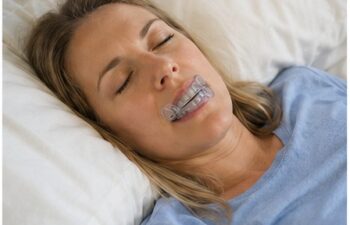
Occasional snoring may seem harmless. Frequent loud snoring, interrupted breathing, or waking up gasping for air deserves closer attention.
These symptoms may be associated with obstructive sleep apnea, a condition in which breathing repeatedly decreases or stops during sleep. The National Heart, Lung, and Blood Institute lists loud snoring, gasping for air, and breathing that starts and stops among the primary nighttime symptoms of sleep apnea. Daytime fatigue, dry mouth, headaches, difficulty concentrating, and insomnia may also occur.
For appropriate patients, a custom dental sleep appliance may offer a comfortable treatment option. However, it is important to understand what these appliances do, how they differ from ordinary night guards, and why physician-dentist collaboration matters.
What Is a Mandibular Advancement Appliance?
A mandibular advancement appliance—also called a mandibular repositioning device or oral sleep appliance—fits over the upper and lower teeth.
While the patient sleeps, the appliance supports the lower jaw in a carefully selected forward position. This positioning can help keep the upper airway more open and reduce airway collapse, snoring, and obstructive breathing events.
It resembles an orthodontic retainer or two connected dental trays, but it is custom-made and calibrated specifically for sleep-disordered breathing.
The American Academy of Dental Sleep Medicine recognizes oral appliance therapy as an established treatment option for snoring and obstructive sleep apnea. Current standards address appliance selection, fabrication, calibration, side-effect management, long-term monitoring, and collaboration between dentists and physicians.
Is “Mandibular Repositioning” the Correct Term?
Yes. You may hear several related terms:
- Mandibular advancement device
- Mandibular repositioning appliance
- Oral appliance therapy
- Dental sleep appliance
- Sleep apnea mouthpiece
Although terminology varies, these generally describe an appliance intended to support the airway by positioning the lower jaw forward.
Waking Up Gasping: When Snoring Needs Evaluation
Waking suddenly with a choking or gasping sensation can be frightening. It does not automatically confirm sleep apnea, but it should not be dismissed—particularly when combined with loud snoring, witnessed breathing pauses, morning headaches, dry mouth, or persistent daytime fatigue.
A dentist can screen for oral and anatomical signs that may be associated with sleep-disordered breathing. A formal sleep-apnea diagnosis, however, requires evaluation by an appropriate medical provider and may include an overnight or home sleep study. NHLBI specifically advises patients experiencing these symptoms to speak with a healthcare provider about whether sleep testing is needed.
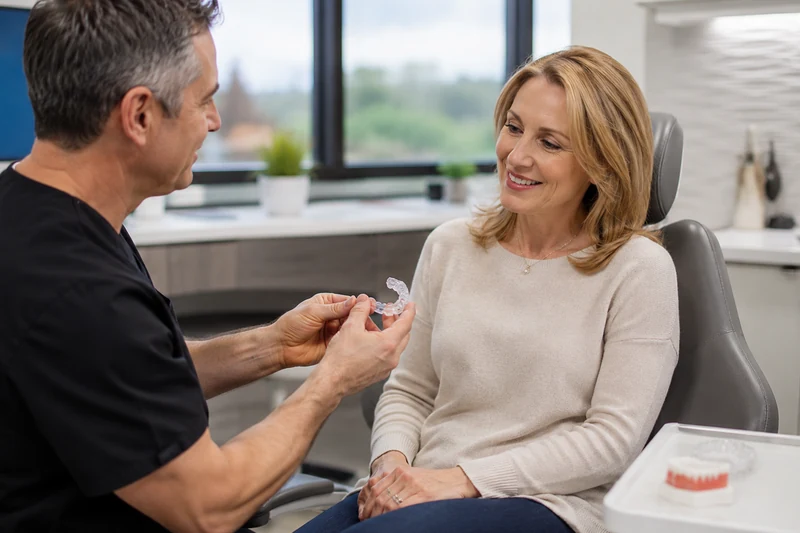
Who May Be a Candidate for Oral Appliance Therapy?
An oral appliance may be considered for certain adults with diagnosed obstructive sleep apnea or primary snoring.
Clinical guidelines from the American Academy of Sleep Medicine and American Academy of Dental Sleep Medicine recommend considering a custom, titratable oral appliance for adults with OSA who are unable to tolerate CPAP or who prefer an alternative form of treatment. The guidelines also emphasize qualified dental oversight and follow-up sleep evaluation to confirm effectiveness.
Candidacy may depend on:
- The sleep diagnosis and severity
- The condition of the teeth and gums
- Available jaw movement
- Existing crowns, bridges, implants, or dentures
- Jaw-joint health
- The patient’s bite
- Previous experience with CPAP
- Other medical and anatomical factors
An appliance is not automatically appropriate for every person who snores.
Is a Sleep Appliance the Same as a Night Guard?
No. This is where the terminology can become confusing.
A Night Guard or Bite-Stabilizing Orthotic
A conventional night guard, occlusal splint, or bite-stabilizing orthotic is generally designed to:
- Protect teeth from grinding and clenching
- Distribute bite forces
- Reduce stress on certain teeth or restorations
- Support management of selected jaw-muscle or temporomandibular symptoms
Its primary purpose is dental protection or bite stabilization.
A Mandibular Advancement Appliance
A sleep-apnea appliance is designed to support the airway. It engages both arches and positions the lower jaw forward during sleep.
A standard upper night guard does not treat airway obstruction. In some patients, using the wrong appliance without evaluating breathing symptoms could leave an underlying sleep disorder unaddressed.
Therefore, “orthotic” may be an acceptable term for certain bite appliances, but a bite-stabilizing orthotic and a mandibular advancement appliance are not the same treatment.
What Happens During the Oral-Appliance Process?
1. Screening and Medical Diagnosis
The process begins with a discussion of snoring, gasping, fatigue, CPAP use, medical history, and other symptoms. When sleep apnea is suspected but not yet diagnosed, the patient is referred to an appropriate medical or sleep provider.
2. Comprehensive Dental Examination
The dentist evaluates the teeth, gums, bite, jaw joints, range of motion, existing restorations, and overall suitability for appliance therapy.
3. Digital Impressions and Bite Registration
Precise scans or impressions are taken. The dentist also records a therapeutic starting position for the lower jaw.
The AADSM’s updated standards emphasize that the comprehensive examination, accurate dental impressions, and bite registration require appropriate in-person care.
4. Appliance Delivery and Calibration
Once fabricated, the appliance is checked for fit and comfort. The jaw position may be advanced gradually rather than moved to its final position immediately.
5. Follow-Up and Sleep Testing
Follow-up visits allow the dentist to assess comfort, jaw symptoms, tooth movement, bite changes, and appliance condition. The treating medical provider may recommend follow-up sleep testing to determine whether breathing has objectively improved.
Are There Side Effects?
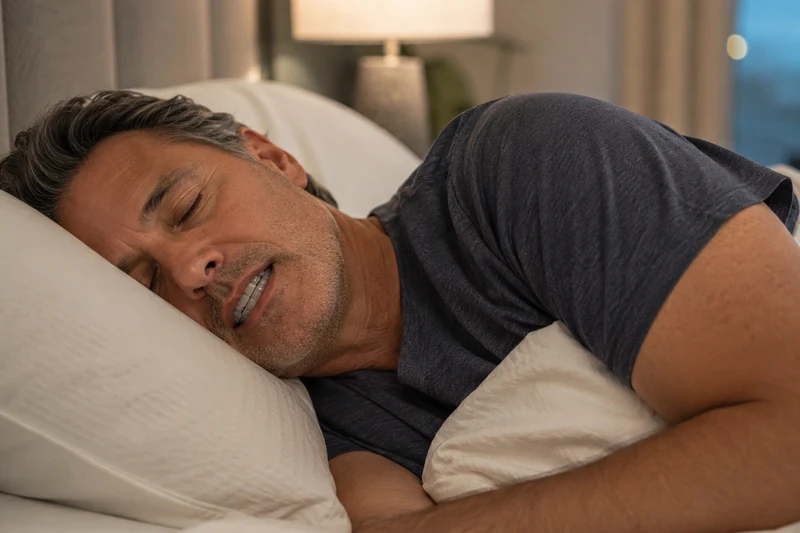
Some patients experience temporary jaw soreness, tooth sensitivity, changes in salivation, dry mouth, or morning bite differences. Longer-term tooth movement or bite changes are also possible.
Professional calibration and ongoing dental supervision help identify and manage these effects. Current dental sleep-medicine standards specifically include side-effect monitoring and long-term follow-up as essential parts of treatment.
Frequently Asked Questions
Can a dentist diagnose sleep apnea?
A dentist can screen for possible signs and coordinate care, but a medical provider establishes the diagnosis. A sleep study may be needed before an appliance is prescribed for OSA.
Is an oral appliance better than CPAP?
CPAP remains an important and highly effective treatment. An oral appliance may be appropriate for selected patients who cannot tolerate CPAP, prefer an alternative, or receive a physician’s recommendation based on their individual condition.
Can an oral appliance help with snoring?
Yes, oral appliances can reduce primary snoring in appropriately evaluated adults. Because snoring may indicate obstructive sleep apnea, a medical assessment should occur before treating it as a stand-alone nuisance.
Will a regular night guard stop sleep apnea?
No. A conventional night guard is not designed to hold the lower jaw in a therapeutic airway-supporting position.
What should I do if I wake up gasping?
Discuss the symptom promptly with a healthcare provider, especially when it occurs repeatedly or accompanies loud snoring, witnessed breathing pauses, headaches, or daytime exhaustion. A sleep evaluation can determine whether obstructive sleep apnea or another condition is involved.
Explore Dental Sleep-Appliance Care in Alpharetta
Restful sleep affects far more than how you feel in the morning. When snoring, gasping, CPAP difficulties, or persistent fatigue interfere with daily life, an individualized evaluation can help clarify the next step.
Creative Dentistry of Atlanta can assess your dental health, bite, and potential suitability for a custom mandibular advancement appliance while coordinating with your medical or sleep provider. Contact our Alpharetta location to schedule a consultation and learn whether oral appliance therapy may fit into your prescribed sleep-apnea treatment plan.
Sources
National Heart, Lung, and Blood Institute: Sleep Apnea Symptoms
American Academy of Dental Sleep Medicine: Oral Appliance Therapy
American Academy of Dental Sleep Medicine: Standards and Guidelines
Journal of Clinical Sleep Medicine: Clinical Practice Guideline for Oral Appliance Therapy